
The right evidence depends on the selected material, structure, market and buyer requirements. A document name alone does not confirm relevance.
Define what needs to be proven.
Start with the product, target market, packaging specification and buyer requirements. This determines which supplier, material, process and testing evidence should be reviewed.
Review qualification documents carefully.
For files such as FSC, ISO 14001 or BSCI, confirm the holder, issuing body, validity period, scope and relevance to the selected project before relying on the document.
Connect material evidence to the specification.
Ask which material file applies to the selected paper, board, ink, coating or other component. Availability and required format depend on the material and market.
Make production checkpoints visible.
Define the checks that matter for incoming materials, structure, print and finish, assembly, packing and final inspection. The approved sample or reference should remain part of the comparison.
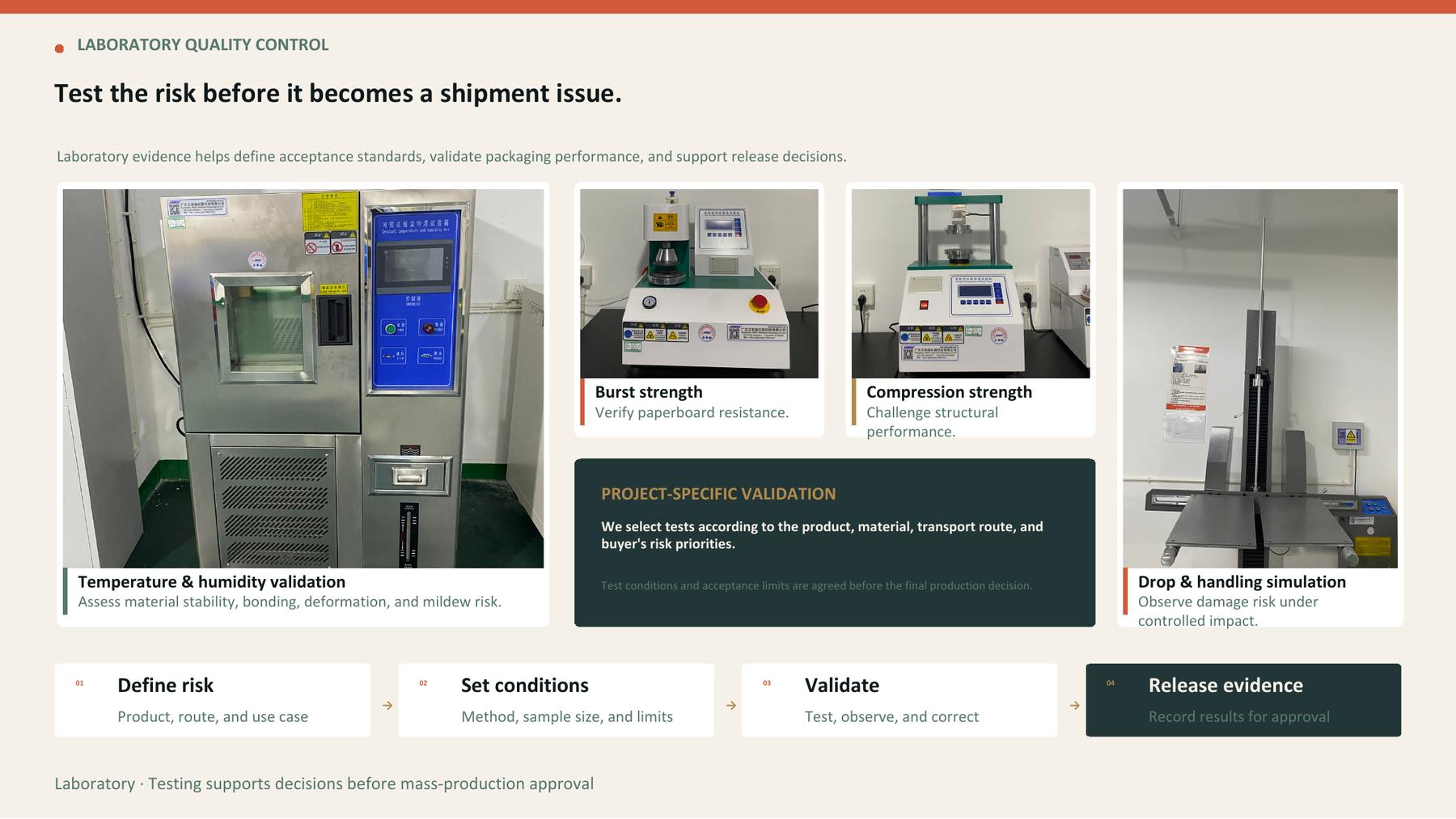
Choose test categories for the project.
Testing may relate to dimensions, appearance, function, packing or transport context. Required methods, limits and third-party involvement must be agreed for the project.
Keep an approval record.
Link the latest specification, proof, sample comments, agreed checkpoints and requested documents. This reduces ambiguity when several buyer and supplier teams are involved.